A startup needs two kinds of character at once. Stubbornness about the problem it exists to solve. And flexibility about the solution. Most founders who get stuck have one of these and not the other.
Some fall in love with their first product and defend it long after the market has said no. Others change direction every few months and never stay with a problem long enough to understand it. The companies that last tend to sit in between: fixed on the problem, loose on the method.
The man of many turns
The Odyssey opens by calling its hero polytropos, often translated as "the man of many turns". It is the first thing Homer wants the reader to know about him.
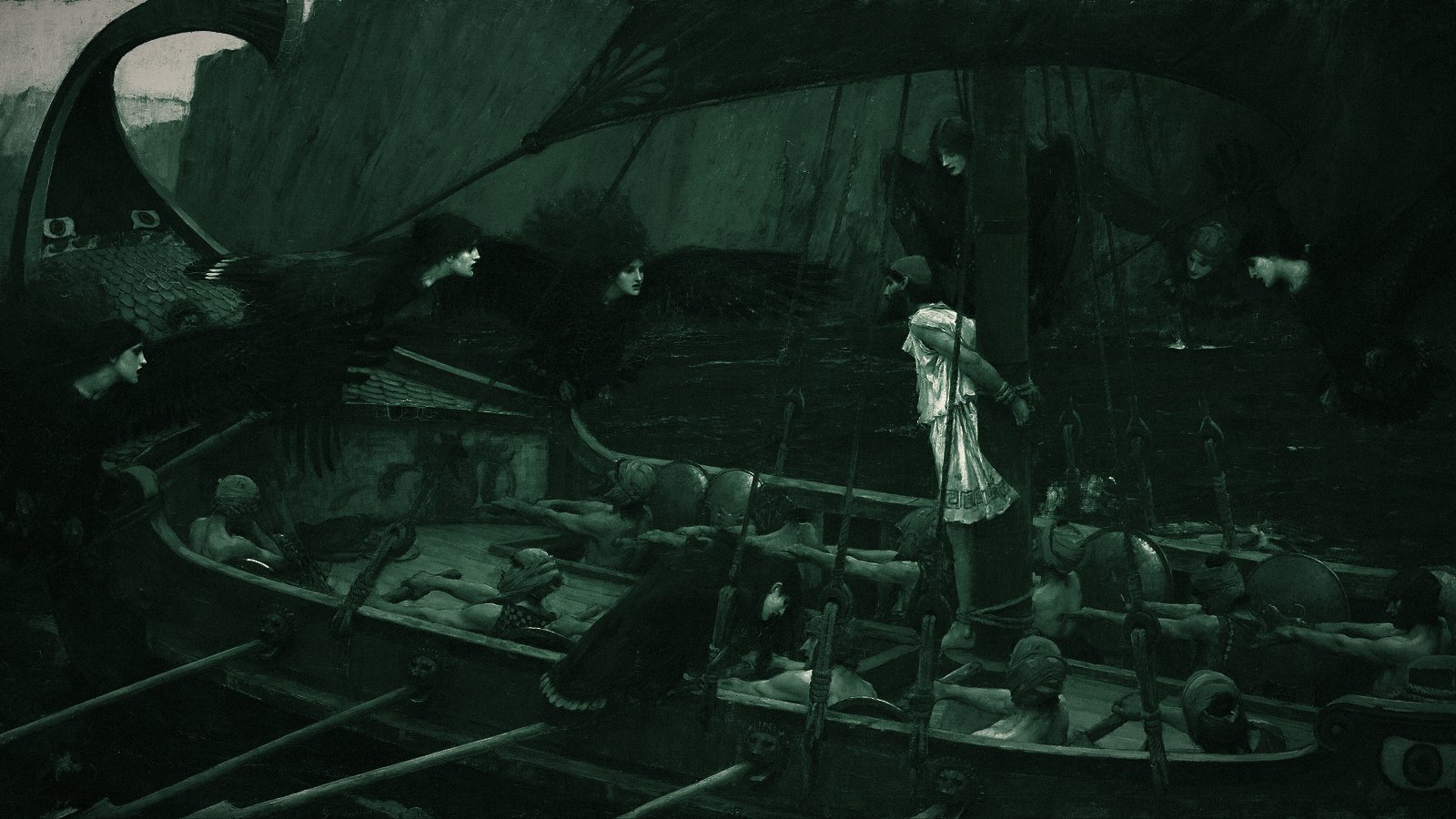
Odysseus never changes what he is trying to do. He wants to get home. Almost everything else changes. He escapes the Cyclops' cave clinging to the belly of a ram, ties himself to a mast to pass the Sirens, builds a raft to leave Calypso's island, and comes home disguised as a beggar. Each obstacle gets a different answer. The goal stays the same for ten years at sea.
That is a good model for a startup. The problem is home. The product is the route.
What famous pivots actually were
The best known startup pivots are often told as stories of luck. Looked at closely, they are stories of a team that kept its strengths and its eye on a real need, and let go of a solution that wasn't working.
Slack began inside Tiny Speck, a company building an online game called Glitch. The game didn't attract enough players and was shut down in 2012. The team had built an internal chat tool to coordinate their own work, and around the turn of 2013 Stewart Butterfield told investors the company would turn that tool into its product.
YouTube was first conceived as a video dating site, where people would upload videos about themselves. Almost nobody did. So the founders opened it up to any video.
Instagram started as Burbn, a check-in app with many features. Users mostly cared about one of them: posting photos. The founders cut almost everything else.
In each case, the team did not walk away from what it was good at. Slack's founders were still building tools for people working together. YouTube's founders still wanted anyone to share video easily. Instagram's founders followed what their users were already doing. The surface changed. The core held.
The data on changing course
There is some evidence for the middle path. The 2011 Startup Genome Report studied more than 650 web startups. It found that companies that pivoted once or twice raised about 2.5 times more money and saw 3.6 times better user growth than those that pivoted more than twice or never pivoted at all. They were also 52% less likely to scale too early.
The finding is a correlation, not proof. But the shape of it makes sense. Never changing usually means not listening. Changing constantly usually means not learning. One or two well-judged turns, based on what the market actually showed, sit in the useful range.
Pivot or give up
From the outside, a pivot and a quit can look the same. The difference is in what stays.
A pivot keeps the problem, the team's strengths and everything learned so far, and applies them to a better answer. Giving up drops the problem itself. One builds on the work done. The other resets it.
A few signals usually point to a real pivot. Users keep using one part of the product and ignoring the rest. Customers describe a pain the product only touches at the edge. The same request keeps coming back from people who are willing to pay. In each case, the market is not saying "stop". It is saying "not like this".
Flexibility also has a cost. Every change throws away some momentum, some code and some trust. That is why the number of turns matters, and why each one should be based on evidence, not on boredom or a new trend.
The takeaway
Be stubborn about the problem. It is the reason the company exists, and it should not change every quarter.
Be flexible about the solution. The first version is a guess, and the market will correct it.
Odysseus took ten years and many turns to get home. He never once changed where home was.